2024 ISBM Members Meeting
Foresight in B2B: the Next 40 Years in B2B Marketing
Highlights for Conference Speakers & Presentations
Plan to join us at Penn State as ISBM celebrates 40 years of Foresight and the Future of B2B Marketing
Event Overview:
Tuesday, June 4
- 8:00AM – Noon
- Half day mini course – “Everyday VOC: How to Capture Insights from Every Customer Interaction” taught by Dan Adams, The AIM Institute. (Participants must register in advance, for a small fee).
- Noon – 5:00PM
- 30 minute 1-on-1 meetings with our ISBM Academic and Practice Fellows and our Conference Presenters
- 5:00PM – 8:00PM
- Welcome dinner and humorous retrospective looking back at the last 40 years, with many guests of honor.
Wednesday, June 5
- 8:00AM – 5:00PM
- Featured Presentation and Speakers (details listed below)
Thursday, June 6
- 8:00AM – 2:30PM
- Featured Presentation and Speakers (details listed below)
- 2:30PM – 5:00PM
- The Marketing Excellence Roundtable – This meeting’s special topic will be “A.I. Ready,” a new book from Amir Hartman, the groundbreaking author of Net Ready, (which in the 1990’s laid out the framework for deploying the internet). His new book provides a framework to plan and delploy A.I..
Looking to the Past – Anticipating the Future
Fariborz Ghadar has always had a sixth sense about global trends before they happened. But there were many things he could not foresee. In the last 40 years, technological advancements have led to major scientific breakthroughs, drastic changes in communications and transportation, and the acceleration of globalization. While we may have seen these many of the technical changes coming, the speed of their development and fallout/consequences of their adoption were largely unknowable.
Armed with the lessons learned from the last 40 years, we must look ahead and prepare our businesses to meet the needs and demands of a global community that is both more connected by circumstance and splintered by cultural and political divisions than in any other time in modern history. Together we face many challenges, including mass migration, global warming, regional conflict, and the rise of authoritarianism, and pandemics. While technological advancements will help address some of these issues, many require a more nuanced and holistic approach.
For this opening talk, Dr. Ghadar will share personal anecdotes and knowledge stemming from his research and experience from working as a global consultant, academic, and businessman at the forefront of global technological and social change the last 40+ years. He will also discuss emerging trends in society, politics, business, and the environment that could play out in the next 40 years.
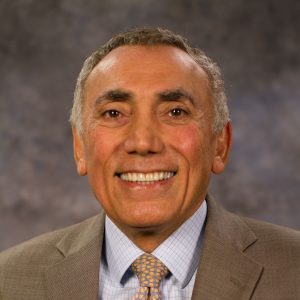
Fariborz Ghadar is the William A. Schreyer Professor of Global Management, Policies and Planning, former Founding Director of the Center for Global Business Studies at Penn State’s Smeal College of Business and is a Senior Advisor and Distinguished Scholar at The Center for Strategic and International Studies.
Reflections on the Future of B2B Marketing
This session is a moderated panel featuring three ISBM Distinguished Research Fellows. Each of these ISBM Fellows will reflect on the emerging trends raised by Dr. Fariborz Ghadar in the preceding session and discuss what they see as the biggest opportunities and challenges for B2B Marketing in the coming years. The session will conclude with a Q&A session between the audience and the panelists.
Session will be moderated by Lynn Yanyo (Executive Director, ISBM) and J. Andrew Petersen (Associate Professor of Marketing, Penn State & Associate Director, ISBM)

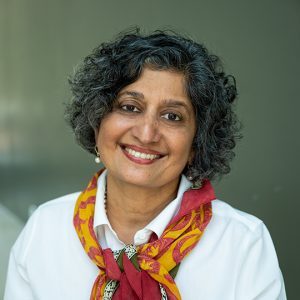
Sandy Jap specializes in B2B strategy, particularly strategic partnering, multichannel management, channel and retailing strategy. She was previously on the faculty at MIT’s Sloan School of Management and the Wharton School of the University of Pennsylvania. Her books include Partnering with the Frenemy and A Field Guide to Channel Strategy, both of which are how-to books on go-to-market strategies. She has received numerous research and lifetime achievement awards for her sustained research excellence and service contributions. She is a fellow of the American Marketing Association, Marketing Science Institute, Institute for the Study of Business Markets at the Pennsylvania State University, and the Direct Selling Education Foundation. She is an advisory board member of the Marketing Science Institute and Marketing Letters. Her PhD is from the University of Florida (Go Gators!).
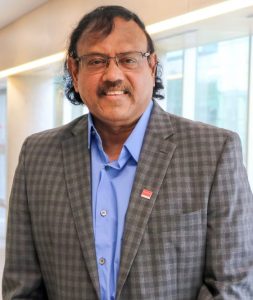
V. Kumar (VK) is the Professor of Marketing, and the Goodman Academic-Industry Partnership Professor, Goodman School of Business, Brock University, ON, Canada. Prior to joining Brock, VK was the Salvatore Zizza Professor of Marketing, Tobin College of Business at St. John’s University, NY. He has held/holds several Distinguished Endowed Faculty Positions in the U.S., and Distinguished Fellowships across universities worldwide. VK has also been honored as a Legend in Marketing through the 10-Volume Legends in Marketing series published by Sage Publications with commentaries from scholars worldwide. Professor Kumar has published over 300 papers in scholarly journals and 30 books, received over 20 Lifetime Achievement Awards, and over 25 Research and Teaching Excellence Awards. Professor Kumar has served as the Editor-in-Chief of the Journal of Marketing (2014-2018) and serves/served as the Department Editor of POM, and as the Consulting Editor of JIBS. Global Fortune 500 firms have implemented many of VK’s ideas and models in multiple areas of marketing and operations which have resulted in gains of over multi-billion dollars.
Raji Srinivasan is a Professor of Marketing at the University of Texas at Austin, McCombs School of Business. She has been working at the University of Texas at Austin since 2000 and teaches MBA and PhD courses in high technology marketing: marketing metrics, challenges of global marketing and organizational innovation. Professor Srinivasan has over 8 years of experience in senior executive positions in management consulting with Peat Marwick Mitchell and in account management with J Walter Thompson Advertising. She also founded and successfully managed an advertising agency for four years.
Dr. Srinivasan is an active researcher who does high-impact research. Her research focuses on the areas of marketing strategy, organizational innovation, and marketing metrics. She has published several research publications in leading marketing journals including the Journal of Marketing, Management Science, Journal of the Academy of Marketing Science, and International Journal for Research in Marketing.
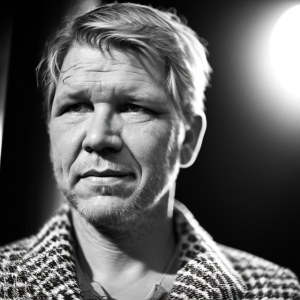
JT Mudge is an award winning futurist and strategist with over 25 years of consulting experience. He has worked with numerous NGO’s governments, and corporations including the UNDP, U.S. CDC, The Nature Conservancy, Pew, Apple, and Samsung.
JT is a keynote speaker and advises organizations on strategy and foresight. He teaches foresight and change theory at the University of Houston.
Seeing Beyond the Horizon
Many corporations and organizations use strategic foresight to help anticipate and drive change. Perhaps the most important practice in foresight is horizon scanning, the ability to identify signs of change in different aspects and time horizons. Learn how to avoid black swan events (rare events we have not envisioned) and determine where to best apply resources to create desired futures. In this presentation, JT will discuss the fundamentals of strategic foresight, horizon scannings, and what drives change. Participants should be able to have the basic skills necessary to strengthen their anticipatory and strategic skills within their organization.

Organizing Insights for Maximum Business Impact
If insights functions wish to maximize their impact on the business and contribute to being relevant to people in the market as well within their organization, they need to combine deep human and business understanding. To realize this, getting close to stakeholders is as important as getting close to and understanding customers.
Based on industry research, qualitative and quantitative research as well as case studies from the industry, we will show that getting to impact is a journey with different routes.
- A first pathway lays in socializing and democratizing insights throughout the organization.
- Next, it is key to develop a holistic understanding through method and data triangulation and get to the ‘why’ of behavior.
- Next, data are backward looking, while there is a clear need for the insights function to have a greater focus on the ‘future’ and ‘business transformation’.
- Furthermore, insights need to provide return and show the effectiveness of its own work to the business.
Finally, getting organized and deliberate is crucial. Map the stakeholders, chose what to automate and transform through technology (e.g. AI), develop a strategic skills and outsource wisely to create headspace.

Niels Schillewaert, Phd, is co-founder and Partner at Human8 – one of the world’s leading edge strategic insights agencies (www.wearehuman8.com).
Niels combined entrepreneurship and commercial research with academic research throughout his career. He has a strong academic background as a Professor of Marketing (2000-2012) and an Adjunct Professor (2019 – Present) at the Vlerick Business School. He obtained a PhD in Applied Economic Sciences from Ghent University and was an award winning ISBM Doctoral Fellow at Penn State University (U.S.A.).
His research was published in leading scientific journals such as Journal of Marketing, The International Journal of Research in Marketing, Journal of Services Research, Journal of the Academy of Marketing Science, Industrial Marketing Management, The Journal of Business Research, Survey Research Methods and Information & Management. Niels is a frequent speaker at international conferences and has guest lectured at several academic institutions e.g. Columbia, NYU, University of Georgia, IE. He is the Former President of ESOMAR – the association of the global insights and analytics community (www.esomar.org).

Lisa K. Scheer is Professor of Strategic Business-to-Business Management at University of Graz (Austria) and retired as the Emma S. Hibbs Distinguished Professor at the University of Missouri.
She earned her PhD in Marketing at Northwestern and a BSBA and MBA at the University of Missouri. She has been immersed in business markets since growing up in a small family-owned common carrier trucking company. This background helps motivate her academically rigorous and managerially relevant research on business markets, marketing strategy, and marketing relationships, which has resulted in publications in top-level journals and various research awards.
Lisa has been honored as an ISBM Distinguished Research Fellow and AMA Fellow and has been director of eight ISBM PhD Research Camps. She has developed or chaired a variety of academic meetings and has been a keynote speaker or featured scholar in Austria, Belgium, Canada, France, Germany, the Netherlands, Switzerland, Turkey, the UK, and the USA.
The Importance of Person-to-Person (P2P) Relationships within B2b Relationships
We are bombarded with claims that people are being displaced by technology—websites, databases, robots, AI, and more. Certainly, these technologies are increasingly deployed in interorganizational relationships, but does that mean people are becoming less important? Although some jobs will be consolidated or eliminated as the workplace evolves, interpersonal relationships will remain important—or even increase in importance—in business-to-business relationships. We will explore ways in which P2P will continue to play an important role in B2B.
Beyond the Cult of Prediction
The essence of leadership and strategy is decision-making under conditions of fundamental uncertainty. Yet far too often, especially since the turn of the millennium, we have pretended that perfect (or at least adequate) certainty can be achieved prior to making strategic decisions. The result, at both organizational and societal levels, has been a series of strategic shocks. 9/11, the Iraq War, the Global Financial Crisis, COVID-19: each of these jolts was in large part the result of a pretense that the future could be predicted with certainty, even with scientific precision. Unfortunately, experts’ response to repeated predictive failure has been to double down on this “cult of prediction,” particularly via numerical forecasting approaches – even in areas in which prediction is either impossible or useless for planning. Fortunately, there is another approach to dealing with fundamental uncertainty: rigorous imagination. But it’s something we are not that good at, as a species, and we all need to get much better at it. This presentation will lay out the principles of rigorous imagination as an antidote to the cult of prediction.

Patrick Marren is a principal of the Futures Strategy Group, specializing in strategy and scenario planning. He has 35 years’ experience in business strategy consulting, corporate finance, and strategic planning. At FSG, Patrick has led or participated in engagements for corporate clients in the transportation, airline, finance, pharmaceutical, chemical, food ingredient, and high-tech industries, as well as for fifteen different federal agencies of the U.S. government, several military branches, the U.S. intelligence community, and major non-profits.
Patrick has an MBA in Finance from the University of Chicago and a bachelor’s degree in Government from Harvard. He had a regular column in the Journal of Business Strategy for about a decade, and has written and spoken extensively on the future and on organizational strategy. He speaks, reads, and writes Greek, and currently resides in Auckland, New Zealand. He is the author of the forthcoming Fatal Certainty: How a Cult of Prediction Made the Twenty-First Century Into an Era of Strategic Shock – and How Rigorous Imagination Could Bring Us Back.

Amir Hartman is Managing Director and leads the AI/Digital Strategy practice at Dasteel Consulting. Working with senior business and technology leaders to develop and implement AI/Digital strategies that maximize the full potential of their most valuable assets—their customers. He is also the AI Strategy Research Director for the Experience Alliance and Fidere.ai.
Before joining Dasteel Consulting, Amir was Managing Director of Customer Success at Oracle, where he worked closely with customer executives to build their digital strategies and ensure they achieve measurable value from their Oracle cloud investments. Prior to joining Oracle, Amir co-founded and served as the Managing Director of Mainstay Company, a B2B digital strategy advisory firm dedicated to engineering customer outcomes from technology investments and enhancing the sales, marketing, and customer success processes some of world’s best technology companies.
Earlier in his career, Amir was a founding member and industry practice leader at Cisco’s Internet Business Solutions Group, where he worked with Cisco’s top customers to develop their internet business strategies to drive growth and improve efficiency.
Amir is a bestselling author, known for works including “Net Ready,” “Competing for Customers,” and the upcoming “AI Ready” (2024). His expertise in digital technology has made him a sought-after speaker. Beyond his writing, Amir has contributed to education and research, teaching at MBA and Executive MBA programs at Berkeley’s Haas School of Business and Harvard Business School, with a focus on internet business strategy and digital transformation.
Beyond the Hype: Top AI Enablement Use Cases in B2B
With the backdrop of surging and ever-changing AI innovations, B2B leaders are tasked with discerning which technologies are mere novelties and which are essential for competitive advantage. “Beyond the Hype: Top AI Enablement Use Cases in B2B” aims to highlight the most impactful AI applications across various industries. Led by bestselling author and acclaimed AI/Digitization Strategist Amir Hartman, whose insights are further elaborated in his upcoming book about AI Readiness, this session will explore how businesses can effectively gauge their AI readiness and effectively deploy AI solutions.
Participants will gain valuable knowledge on:
- Identifying and Implementing Top AI Use Cases: Discover the leading AI applications that are reshaping B2B sectors, from enhanced decision-making processes to advanced customer engagement strategies.
- Evaluating AI Readiness: Learn the critical factors that determine an organization’s readiness for AI integration, ensuring that technological investments align with operational capacities and strategic goals.
- Leadership Strategies for AI Implementation: Unpack the essential leadership qualities and strategies necessary to navigate the complexities of AI adoption, ensuring your team is prepared and proactive in this transformative era.
The More Things Change…Growing Revenue will Continue to be the Focus, with new Tools to Accelerate this Growth
The Insight Group Viewpoint, presented by Joe Foresman
- Sales will continue to be a critical element for business success and validating customer wants and needs the most important task.
- A.I. will help to accelerate the process, but findings will still require validation in the marketplace.
- Digital capabilites, and the Tech-based side of the team will grow in importance.
Customer Example, presented by Erick Boeck
- Situation:
- US seed sales market share between companies has been stagnant since 2015. Breakout growth of top-line sales volume outside of price levers have been minimal.
- Additionally, farmer customers have seen a decline in service from seed suppliers with less than 70% seeing follow-up service (field scouting) of their seed purchase.
- The seed industry has seen billions of dollars invested in digital ag, with adoption from growers not meeting expectations.
- The goal/objective was to increase Syngenta’s largest seed brand, Golden Harvest seed sales by introducing a unique product plus service + digital offering that better met customers and prospects needs in a bold, modern, simple and seamless model for customers.
- The clear success measures were: Customer’s emotional attachment, new growers acquired and overall growth rate differentiated from traditional models
- We will describe the methodology used by Syngenta and the INSIGHT Group to carry out the project.
- Provide a snapshop of the wor on the launch and how the team evolved over the last few years.
- Present the results of the GHX service and product offering highlighting key results and achievements.
- Implications for Syngenta and Insight.

Joe Foresman, is President of The INSIGHT Group. He is a thought leader in “value mapping” and leads the Agribusiness market segment. his clients include Food Distribution, Analytics, Biological, Technology, Seed, and Crop Protection companies. These companies range in size from “bootstrapping” startups to global market leaders.
Joe, joined The Insight Group after 34 years of highly successful achievements in the agriculture industry for DuPont Pioneer. Joe led or participated in more than 200 customer wants and needs assessments in the US and Brazil. These assessments were on farms, dairies, ethanol plants, processors as well as food companies and led to the development / execution of “first-of-a-kind” offerings that were manifested in launching a new services or acquisitions. Several of the offerings used big data / analytics as core components to deliver the integrated fee-based solutions.

Eric Boeck, is the Regional Director, North America of Syngenta Seeds. Eric is committed to creating the most modern seed experience for farmers via Syngenta’s team of seed advisors and retailers, and he has unleashed top industry talent to create an organization that is driven to solve the challenges farmers face.
An agribusiness leader with more than thirty years of experience, Eric is at the helm of a successful seeds business with a far-reaching field crop strategy spanning marketing, farmer-based sales, and digital agriculture technology.
Since joining Syngenta in 2018, Eric has played a key role in driving transformational change and returning the seeds business to profitability. From elevating the emphasis on the critical role of digital innovations and data to engaging cross-functional teams across Syngenta Seeds, his contributions have dramatically changed how a farmer can now purchase seed.
Eric is an active member of Minorities in Agriculture, Natural Resources and Related Sciences, where he works to foster academic and professional advancement and to make the agriculture industry inclusive for all.
Eric grew up on a corn, soybean, swine, and dairy operation in western Iowa and credits this environment, along with his heavy involvement in 4-H, FFA, and Iowa State agricultural clubs, for shaping his approach to business and his appreciation of farmers and those who support farmers. Eric earned a Bachelor of Science from Iowa State University.
. . . and introduction to our new ISBM Distinguished Research Fellows and ISBM Scholars.