Customer expectations are not just rising, but reshaping industries. In turn, the concept of ‘commercial excellence’ has emerged as a key strategy for businesses seeking sustainable growth and competitive advantage.
Traditionally, industries like oil and gas have concentrated on operational efficiency – a foundational focus that is no longer sufficient in today’s evolving landscape. The digital revolution, spearheaded by giants like Amazon and Apple, has redefined what customers expect in terms of service, innovation, and engagement, compelling all sectors to adapt and realign their strategies.
Commercial excellence represents this strategic shift, moving beyond operational prowess to a more nuanced, customer-centric approach. It’s about integrating customer expectations into the core of business practices, ensuring that every aspect of the commercial process is aligned with the changing needs of the market. This approach not only enhances customer satisfaction, but also drives measurable returns on investment, making it a critical component of modern business success.
Quick Takeaways
- Businesses should prioritize innovation and renovation to meet evolving customer needs, ensuring that products resonate with customer preferences.
- Leveraging data analytics for personalized marketing enhances effectiveness, with tools like geotargeting and microsegmentation identifying growth opportunities.
- Optimizing sales force productivity and tailoring activities based on outlet attributes ensure resources are focused on high-value activities, maximizing impact.
Key Components of Commercial Excellence
Commercial excellence is a multifaceted concept that encompasses various critical components, each playing a vital role in driving business growth and customer satisfaction.

By focusing on the following key components, businesses can achieve commercial excellence, driving profitable growth and outperforming competitors.
1. Customer Needs
Successful companies focus on innovation that resonates with customer needs and preferences. This involves not only offering new services, but also renovating existing ones to align with evolving trends.
2. Data-Driven Marketing
Leveraging data analytics and technology to personalize marketing efforts is crucial. Companies that excel in this area generate more sales per dollar spent on marketing, using tools like geotargeting and microsegmentation to identify growth opportunities.
3. Sales Excellence
Optimizing sales productivity and tailoring sales activities based on quantitative attributes of outlets are key. This approach ensures that resources are focused on high-value activities and outlets.
4. Agility and Responsiveness
The ability to quickly adapt to market changes and customer preferences is a hallmark of commercial excellence. This includes using agile methodologies and test-and-learn approaches to optimize marketing and sales strategies.
5. Integrated Customer Management
Breaking down silos between online and offline sales and fostering cross-functional collaboration is vital for seamless customer management across all channels.
The Role of Customer-Centricity in Commercial Excellence
A recent study shows that almost 50% of businesses surveyed are making customer experience their top priority in the next 5 years.
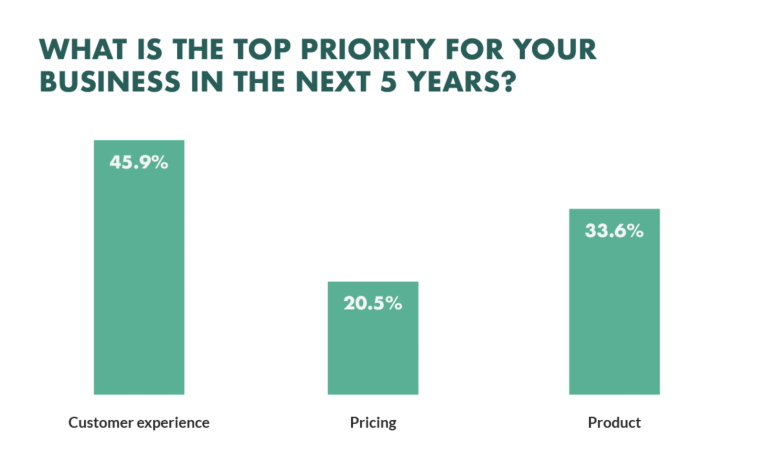
This statistic underscores the critical role of customer-centricity in retaining customers and sustaining business growth. By focusing on the following areas, businesses can prioritize the customer at every touchpoint:
Understanding and Meeting Customer Expectations: Central to customer-centricity is not only responding to customer needs, but also proactively anticipating them to enhance every interaction along the customer journey.
Personalization and Tailored Experiences: Key to customer-centricity, personalization involves adapting experiences to individual preferences, boosting satisfaction and loyalty through customized products and communications.
Feedback and Continuous Improvement: Customer-centric businesses focus on using customer feedback for ongoing improvement, continually adapting their offerings to better align with customer needs.
Building Long-Term Relationships: Customer-centricity aims to cultivate long-term relationships over short-term transactions, fostering trust and loyalty that transform customers into brand advocates.
Integrating Customer-Centricity Across All Functions: Effective customer-centricity involves its integration across all business areas, ensuring that every department is committed to delivering value to the customer.
Leveraging Technology for Enhanced Customer Experiences: Technology, including CRM systems and AI, is crucial in customer-centric strategies, offering deeper insights into customer preferences and streamlining interactions for greater efficiency and enjoyment.
These actions will lead businesses to commercial excellence, ultimately resulting in increased loyalty, higher retention rates, and sustained growth.
Key Strategies for Achieving Commercial Excellence
Achieving commercial excellence is a multifaceted endeavor that requires a strategic blend of practices. The following strategies will help businesses build the necessary capabilities to drive superior execution and sustain profitable growth in a competitive market:
1. Innovative Product Portfolio and Design
Focus on innovation and renovation to meet evolving customer needs. This involves identifying growth opportunities through customer insights and ensuring existing products align with current market trends.
2. Data-Driven Marketing
Leverage data analytics and technology for personalized marketing. According to a recent study, 87% of industry professionals reported that customers expect personalized content

3. Agile Revenue Growth Management
Develop revenue growth strategies based on detailed market and customer insights. Use analytics to understand consumption patterns and optimize pricing and promotional strategies.
4. Enhanced Sales and In-Store Execution
Utilize advanced tools and analytics to drive sales force productivity and tailor sales activities based on outlet characteristics. Focus on high-value activities to maximize in-store impact.
5. Omnichannel Customer Management
Integrate online and offline sales strategies for seamless customer management. Engage cross-functional teams to support diverse customer needs across all channels.
6. Continuous Learning and Adaptation
Embrace a culture of continuous learning and adaptation. Use test-and-learn approaches to optimize marketing campaigns and adjust strategies based on market feedback.
7. Collaborative and Cross-Functional Teams
Foster collaboration across functions to ensure cohesive execution of commercial strategies. Encourage teams to work together in responding to market changes and customer preferences.
Build A Future-Proof Business Model Today with ISBM
Achieving commercial excellence is a dynamic process that requires a strategic approach, focusing on customer-centric innovation, data-driven marketing, and agile revenue growth management. Emphasizing integrated omnichannel strategies, continuous learning, and cross-functional collaboration, businesses can navigate today’s complex market.
This pursuit is not just about short-term gains, but fostering sustainable growth and building lasting customer relationships, essential for thriving in a competitive, customer-focused commercial environment.
ISBM is a nonprofit, global network of business researchers and practitioners. Ask about how an ISBM Membership can help you now or visit ISBM today to learn more!